
From mulch and greenhouse films to drip irrigation and bale wrap, discover Techmer PM’s recommended material systems and additive packages for durable ag plastics.
If you work in modern agriculture, whether you’re a grower, film converter, or equipment OEM, you rely on plastics that last long enough and do precisely what they’re supposed to do. That requires the right material system: the base polymer plus a tailored additive and color package designed for your crop, climate, season length, and processing setup.
At Techmer PM, we specialize in materials design, co‑creating color and additive masterbatches that protect performance in harsh field conditions, meet regulatory needs, and support sustainability goals. Our agriculture portfolio spans crop protection films (mulch/greenhouse), water delivery (drip irrigation), harvest packaging (bale twine/net wrap), material handling (bins/totes), and farm equipment components, with testing capability that includes accelerated weathering in an A2LA‑accredited laboratory.
Techmer PM is resin‑agnostic, demonstrating our flexibility and adaptability. We partner with all major resin suppliers and tailor additive packages to your preferred grade, process, and region.
The Short Answer?
For agricultural applications, Techmer PM recommends polyethylene‑family films (LDPE/LLDPE with EVA where needed) for mulch and greenhouse, HDPE for irrigation tubing, PP/HDPE for bale twine, net wrap, and bins, and tailored UV/antioxidant stabilization, antifog, IR/thermic modifiers, antiblock/slip, and color packages tuned to your climate and agronomy.
The details matter – UV chemistry, dosage, pigment choice that can (typically help grow crops faster), and agrochemical exposure can make or break field life.
Let’s break down what Techmer PM recommends by application, and how you can specify it for your farm or converting line.
Mulch Film: Weed Suppression, Moisture Control, and Light Management
- Typical base: PE film structures (often LLDPE/LDPE; EVA as needed for toughness/clarity).
- What matters most: UV/thermal stabilization, color & light reflection/absorption, antiblock/slip for processability, and (when required) compostable/biodegradable pathways.
Recommended Additive & Color Strategy
- UV stabilizers + antioxidants (AO): The #1 cause of failure in ag films is the wrong UV/AO package or level. We design packages tailored to your expected season length, latitude, elevation, and pesticide/fumigant exposure, as some agrochemicals deactivate UV systems, significantly reducing their lifespan.
- Color controls agronomy:
- Black mulch maximizes weed suppression and warms the soil.
- White or white/black coex reflects light and moderates soil temperature in hot seasons.
- Silver (or silver/black) adds pest deterrence while balancing heat and weed control. (We’ll tune pigment type and loading to balance light management, NIR detectability, and recycling goals.)
- Antiblock and slip improve winding, layflat, and field deployment without sacrificing clarity where needed.
Compostable / Biodegradable Mulch Film
Suppose you’re aiming for EN 17033‑compliant mulch that tills back into soil post‑harvest. In that case, Techmer PM has developed black colorant and stabilization solutions specifically for biodegradable systems, enabling films to endure a growing season before fully degrading after burial. We’ve demonstrated designs with commercial biodegradable resins that maintain performance without delaying certification.
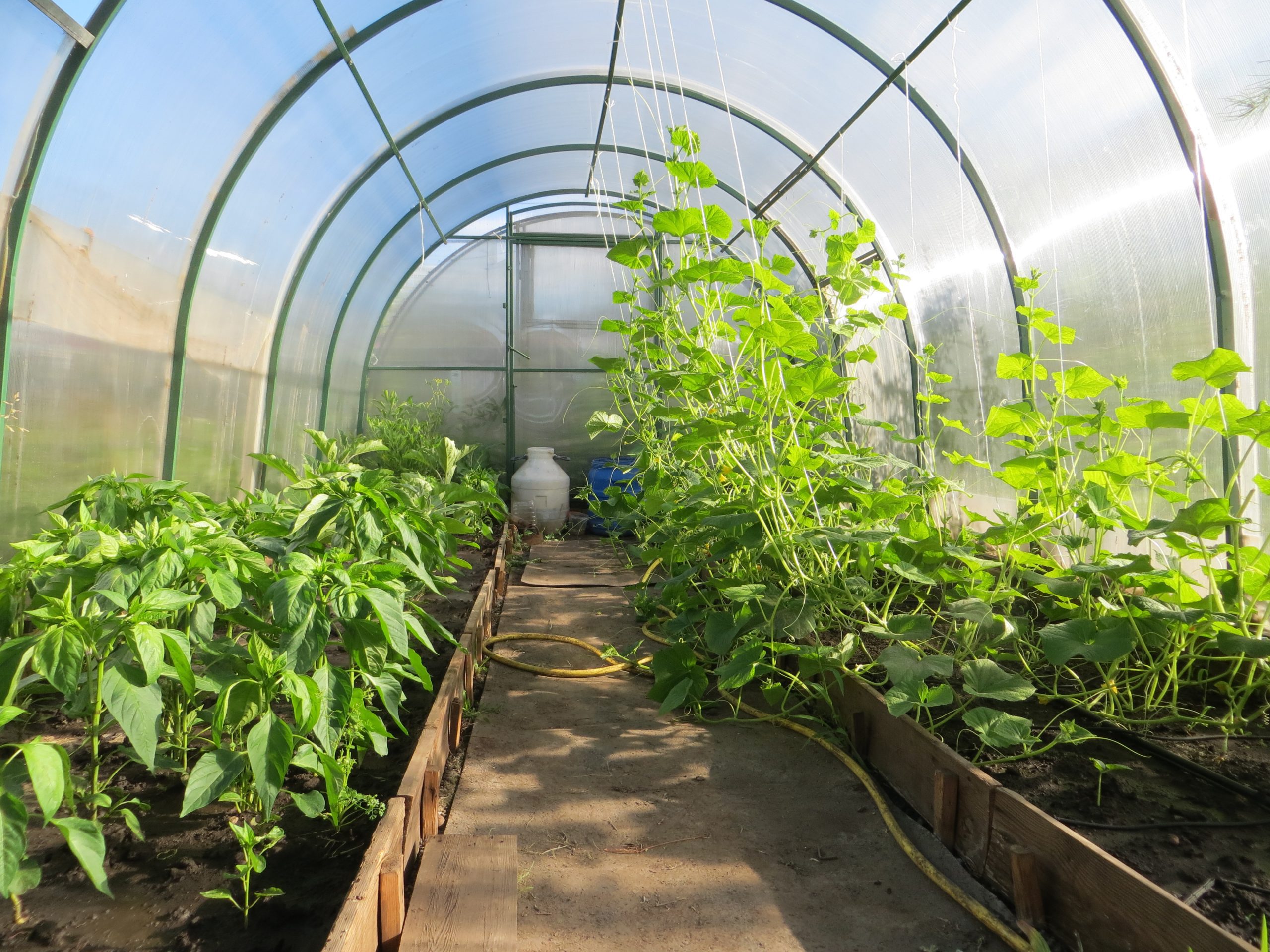
Greenhouse & Tunnel Films: Light, Heat, and Condensation Control
- Typical base: Multi‑layer PE films (LLDPE/LDPE/EVA blends).
- What matters most: Light diffusion, antifog, IR/thermic control, dust resistance, antiviral, plus robust UV stabilization that resists deactivation by structural metals or chemicals.
Recommended Additive Stack
- Light diffusers to spread light uniformly and reduce hotspots.
- Antifog to minimize droplet formation and maintain light transmission, avoiding drip damage on leaves and flowers. Techmer PM’s antifog technology is designed for long‑term clarity in hot and cold environments.
- IR/thermic additives are designed to manage heat, whether it’s about retaining heat overnight to extend the season or managing heat load during the day. This versatile solution is a valuable tool for crop management. Antidust and antiblackening (cut‑flower films), depending on crop and handling.
- UV stabilizers are right sized for thickness, season count, and metal contact; we adjust them where support structures can catalyze degradation.
Why antifog matters: Reduced fog improves visibility and photosynthetically active light, promoting yield and quality. Techmer PM’s antifog lowers surface energy, flattening droplets into a uniform layer, so you maintain clarity and reduce spoilage from “burning” under water lenses.
Drip Irrigation Tape & Tubing: UV, Carbon Black, and Processability
- Typical base: HDPE (or LLDPE blends for tape).
- What matters most: UV/thermal stability, carbon black selection/dispersion, and processing aids to maintain dimensional integrity over long runs.
Recommended Techmer PM Approach
- UV package + carbon black: For above‑ground lines, a UV‑stabilized black offers strong sunlight resistance; we pair UV stabilizers/AO with a precisely dispersed carbon black masterbatch to minimize pinholes and maintain burst strength.
- Process aids (PPA), antiblock/slip: Improve extrudability, reduce die build‑up, and ensure consistent gauge—critical for long tape/tubing lines.
Harvest Packaging: Bale Twine, Net Wrap, and Silage Films
- Typical base: PP (twine), HDPE/LLDPE (net wrap/silage stretch).
- What matters most: UV life (months to years on the stack), friction/handling, and cling (for stretch wraps).
Recommended Additive Packages
- Long‑life UV stabilization for outdoor exposure with tailored HALS/UV absorbers;
- Friction modifiers / antiblock to control snag and improve winding;
- Cling modifiers for silage stretch to maintain bale integrity without residue issues.
Bins, Totes, and Material Handling
- Typical base: HDPE/PP for rigid parts.
- What matters most: UV durability, impact balance, and color fastness under washdown/field abrasion. Choose FDA‑compliant blacks/whites where food contact is relevant; add anti‑counterfeit or metal‑detectable tags for traceability in sorting or returnable loops.
Failure Modes to Avoid (and How We Mitigate Them)
From thousands of field hours and lab cycles, here are the top failure drivers in ag films—and the design levers we use to stop them:
- Wrong or insufficient UV/AO system → Right‑size chemistry and loading to the exact field life and thickness; validate in accelerated weathering.
- Deactivation by pesticides/fumigants → Choose stabilizers resistant to specific actives; adjust pigment system to avoid catalytic effects.
- Poor film quality / excessive heat history → Add process stabilizers and PPA; check resin & extruder profiles to prevent polymer damage.
- Improper resin selection or additive conflicts → We’re resin‑agnostic and will align with your supplier—preventing incompatibilities that reduce life or clarity.
- Mechanical stress/metal catalysis from structures (greenhouse) → Localize UV overbuild and select metal‑tolerant packages.
Sustainability Pathways That Don’t Sacrifice Performance
Ag plastics face unique end‑of‑life realities. Here’s how Techmer PM helps you extend life where needed and enable circularity where possible:
- Biodegradable mulch film systems designed to meet EN 17033 while lasting through the season—till‑in ready.
- NIR‑readable blacks for downstream sortability in recycling (for rigid bins or certain films)—without losing the premium black look or UV shielding.
- Highly loaded concentrates that lower addition rates and reduce overall material usage—sustainable by design.
How We Engineer the “Right” Material System for Your Geography
Techmer PM designs for geography because latitude, elevation, cloud cover, UV index, temperature swings, and humidity all change how plastics age. Our Techmer PM team collaborates with growers and converters across the United States and beyond, using an A2LA‑accredited lab to simulate exposure and dial in performance before you scale.
Why Techmer PM?
- Materials design focus: We don’t sell generic resins—we co‑engineer color and additive systems to solve ag‑specific challenges.
- Accredited testing: A2LA weathering and film characterization to de‑risk your launch.
- U.S. manufacturing footprint with headquarters at 1 Quality Circle, Clinton, TN 37716, supporting North American growers and converters with short lead times.
Quick Application Guide
| Product | Goal | Consider | Sustainable Option |
| Mulch Film | Weed control, moisture retention, soil temp tuning | Black, white/black, silver, wavelength‑selective; UV/AO, antiblock/slip | EN 17033‑oriented biodegradable package (season‑long life; till‑in) |
| Greenhouse/Tunnel Film | Light diffusion, antifog, heat management | Diffusers, antifog, IR/thermic, antidust, antiviral; metal‑aware UV package | |
| Drip Irrigation | UV durability, burst strength, long runs | UV + carbon black masterbatch, AO, PPA/process aids | |
| Bale Twine / Net Wrap / Silage | Outdoor life on the stack, reliable handling/cling | Long‑life UV, friction control, cling modifiers (for stretch) | |
| Bins/Totes | UV durability, impact, traceability | FDA‑compliant colorants, metal‑detectable, anti‑counterfeit tracers as needed |
Frequently Asked Questions
Q: Do I need different UV packages for spring vs. full‑season mulch?
A: Yes. Season length, thickness, and latitude dictate stabilizer chemistry and loading. We model this in our weathering lab and tune for agrochemical compatibility to avoid deactivation.
Q: Can I get antifog that’s food‑contact compliant?
A: Techmer PM supplies antifog technologies that can be formulated to be suitable for food contact while preserving clarity in hot and cold environments.
Q: We use black parts. Can they still be recycled?
A: Ask about NIR‑readable blacks that pass optical sorting while delivering the premium look and UV protection you expect.
Q: Are you locked to specific resin suppliers?
A: No—Techmer PM is resin‑agnostic and works with all major resin manufacturers to match your process and performance targets.
Q: Do you support biodegradable mulch film?
A: Yes. We’ve developed black colorants and stabilization specifically for biodegradable mulch films designed for EN 17033 pathways—durable for the season, degradable after till‑in.